What Can I Make With the Ingredients I Have? A Better Way to Figure Out Dinner
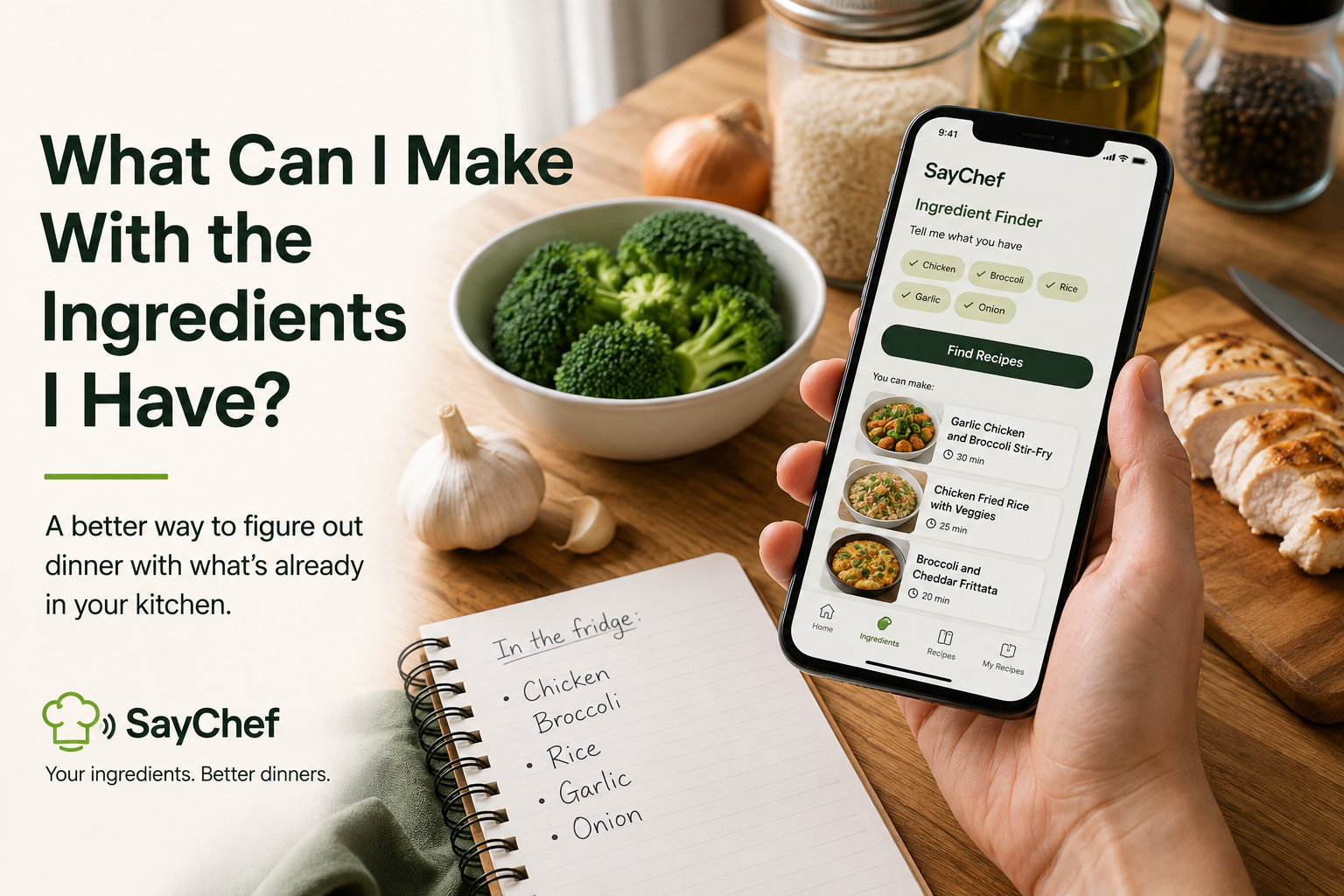
There’s a particular kind of frustration that happens around dinner time. You open the refrigerator, look at a few vegetables, half a package of something from earlier in the week, maybe some eggs or cheese, and somehow still come away thinking there’s nothing to make.
Usually, that isn’t actually true. There’s food in the kitchen. The harder part is looking at a collection of ingredients and turning them into an idea for dinner without spending twenty minutes searching recipes, realizing you’re missing two ingredients, and starting over.
That’s where an ingredient-first approach to cooking can make things much easier. Instead of deciding on a recipe and then figuring out what you need to buy, you start with what you already have and work backward toward something you can cook.
Start With What Needs to Be Used
When you’re trying to figure out what to make with ingredients you already have, don’t start by inventorying the entire kitchen. Start with the ingredients that actually need your attention.
Maybe there’s broccoli that has another day or two left. Maybe you have half an onion from another meal, some mushrooms that need to be cooked, or leftover chicken that shouldn’t sit in the refrigerator much longer.
Those ingredients are your starting point.
From there, look for an anchor. Rice, pasta, eggs, tortillas, potatoes, beans and bread can all turn a handful of miscellaneous ingredients into an actual meal. Add a sauce, seasoning, cheese, broth or another familiar flavor and suddenly the contents of the refrigerator begin looking a lot less random.
Broccoli, mushrooms and eggs could become a frittata. Leftover chicken, rice and vegetables could become fried rice. Tomatoes, spinach and pasta can turn into dinner without requiring a recipe complicated enough to deserve its own shopping trip.
The goal isn’t to find a recipe that perfectly matches every ingredient you own. It’s to find a reasonable way to use the ingredients that matter right now.
Why Recipe Searching Can Make This Harder
Traditional recipe search usually works in the opposite direction.
You search for something that sounds good, open a recipe, scan the ingredient list and discover you’re missing something. Then you open another recipe and repeat the process. Before long, figuring out dinner has become its own project.
That approach makes sense when you’re planning a specific meal in advance. It’s less useful when it’s 6:00 p.m. and you’re simply trying to make dinner from what’s already in the house.
Searching based on ingredients changes the question.
Instead of asking, “What recipe do I want to make?” you can ask, “What can I make with chicken, spinach and rice?” or “What can I cook with eggs, mushrooms and cheese?”
Those are much closer to the decisions people actually make in a kitchen.
That idea is behind SayChef’s Ingredient Finder. You can start with ingredients you already have and use them to find a direction for the meal rather than beginning with a rigid recipe and a list of things you still need to buy.
Think in Meal Patterns, Not Perfect Recipes
One of the easiest ways to become better at using what you have is to learn a few flexible meal patterns.
A stir-fry is a good example. You need some combination of vegetables, possibly a protein, something to serve it with and a sauce or seasoning. The exact ingredients can change every time.
The same is true for soup. Broth, vegetables, beans, meat, noodles, rice and leftover ingredients can be combined in dozens of ways. You don’t necessarily need all of them, and you certainly don’t need the same combination every time.
Frittatas are similarly forgiving. Eggs provide the structure, while vegetables, herbs, cheese and leftover meat can change depending on what’s available.
Pasta works the same way. A vegetable, some garlic or onion, olive oil or butter, cheese, tomato sauce or another simple flavor base can be enough to make something good.
Once you begin thinking this way, an ingredient finder becomes less about discovering one exact recipe and more about finding possibilities you may not have noticed.
Use the Fridge Before the Pantry
There’s another practical advantage to starting with ingredients: it can help reduce food waste.
Pantry staples can usually wait. The zucchini in the refrigerator cannot.
When you’re deciding what to cook, check the refrigerator first and identify one or two ingredients that should be used soon. Then use pantry and freezer ingredients to build around them.
If spinach needs to be used, eggs from the refrigerator and potatoes from the pantry might turn it into a meal. If tomatoes are getting soft, pasta and a few pantry staples can give them somewhere to go. If you have leftover roasted vegetables, they might become part of a grain bowl, soup, omelet or wrap.
This doesn’t require elaborate meal planning. It just changes which question comes first.
Instead of “What do I feel like making?” try “What do I already have that I should use?”
Sometimes that’s enough to make the decision.
You Don’t Have to Use Everything
This is an easy trap when cooking from what you have. Once you start listing ingredients, it can feel like the meal needs to incorporate all of them.
It doesn’t.
If you have chicken, carrots, spinach, potatoes, rice, eggs and cheese, you’re not looking for one heroic recipe that somehow uses all seven. You’re looking for a good dinner that uses a sensible combination of them.
Maybe tonight that’s chicken, carrots and rice. The spinach and eggs can become tomorrow’s lunch.
Ingredient-first cooking works better when the goal is flexibility rather than elimination. You’re gradually using what you have, not competing in a game show where every ingredient has to end up on the plate.
Save the Combinations That Work
Some of the best everyday meals aren’t recipes you planned in advance. They’re combinations you tried because those happened to be the ingredients you had.
The problem is remembering them later.
If you discover that the leftover chicken, roasted peppers and rice in your kitchen make a surprisingly good bowl with a particular sauce, save it. If you improvise a pasta from spinach, mushrooms and Parmesan that everyone likes, keep that version.
Over time, those meals become your own collection of reliable recipes. They’re often more useful than recipes saved from somewhere else because they reflect the ingredients you actually buy and the way you actually cook.
That’s also part of the idea behind SayChef: recipes shouldn’t have to remain fixed instructions you found somewhere. You can keep your own versions, record the meals that worked and come back to them the next time the same ingredients show up in your kitchen.
Dinner Might Already Be in Your Kitchen
Figuring out dinner doesn’t always require another grocery run or another hour scrolling through recipes. Sometimes you just need a better way to look at what’s already there.
Start with the ingredient that needs to be used. Find an anchor such as pasta, rice, eggs or beans. Think in flexible meal patterns instead of exact recipes, and don’t worry about using everything at once.
If you still need inspiration, use the SayChef Ingredient Finder to start with the ingredients you already have and see where they can take you.
Your refrigerator probably isn’t empty. It may just need a plan.
Try it with what's in your fridge right now
List a few ingredients you already have — or snap a photo — and SayChef will suggest recipes you can make tonight.
Start freeTry SayChef free today
Record recipes by voice, organize a digital cookbook, and share with family — all in one app.
Get started freeRelated reads
Recipe Finder With the Ingredients You Have
Tools and search tricks for turning your ingredient list into dinner tonight.
How to Organize a Digital Cookbook That Works
Tag, search, and structure your recipes.
What Makes a Good Meal Planning Tool
The features that separate great tools from static calendars.